


Top 5 Hair Transplant Techniques in 2026 & Mistakes That Ruin Natural Results
Over the years, hair transplants have been developed to provide more natural and long last effects to the patients. It is anticipated that in 2026, advanced technology together with perfected surgery will result in the best results, least scarring and quicker healing than ever. At Revyve Care, our goal is to provide the outcomes that are as natural as possible.
1. Folate Unit Extraction (FUE)
FUE is still among the most widely used hair transplant procedures. In this procedure, single strands of hair present on the donor area are removed and carefully inserted on the areas of thinning or baldness.
2. DHI (Direct Hair Implantation)
Direct Hair Implantation (DHI) is an extension of FUE, in which extraction and planting occur in a procedure in one step with a special kind of tool. This will enable the surgeons to implant hair follicles at the right angles, direction, and depth to produce highly natural growth patterns.
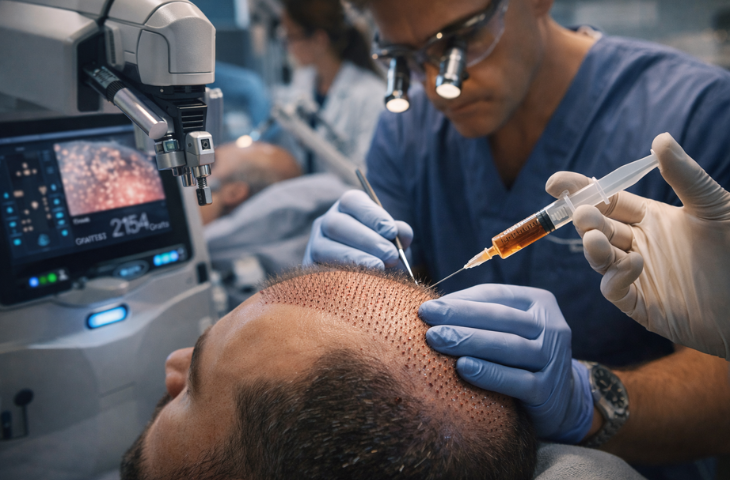
3. Hair Transplantation Robotics
Robotic machines such as ARTAS have transformed the hair transplant industry. These high-end machines help the surgeons in harvesting follicles with high precision and uniformity. The robotic technique is an assurance of ideal choices of donor hairs that minimize any harm and enhance graft presumption.
4. FUT (Follicular Unit Transplantation)
FUT is also referred to as the strip method where a thin strip of tissue is taken off the donor region and cut into separate grafts. Although FUT may leave a linear scar, it remains very effective in those patients who require a high number of grafts within one session.
5. Hair transplant assisted with Stem Cells
The newest innovation in hair restoration is the stem cell assisted procedures. The technology has improved the possibilities of survival and growth of transplanted follicles as the grafts are enriched with stem cell-rich solutions. This is a promising technique in 2026 and beyond, although still in its early stages, early results have been a better density and faster recovery.
Top mistakes that destroy the effects of natural hair transplant
Despite the high level of technology, a hair transplant may not look natural in case some errors are made during the planning or implementation. Here's what to avoid:
1. Improper Hairline Design
One of the most prevalent causes of unnatural hair transplants is a poorly made hairline. The hairline must be appropriate at the age of the patient, the facial ratios and natural growthal lines.
2. Incorrect Graft Placement
The grafts must be laid at the 90 degrees angle in order to obtain the natural-looking results. When hairs are implanted in the wrong direction, they will grow in an unnatural direction.
3. Exploitation of the Donor Area
Excess removal of follicles on the donor area may make the remaining hair weak resulting to thinness. Experienced surgeons are also keen on estimating the capacity of the donors to prevent exhaustion and retain a full look.
4. Poor Density Planning
The lack of proper planning of the density may lead to a sparse, patchy region after the surgery. Natural appearance requires different densities which are more concentrated at the hairline and are less at the crown.
5. Ignoring Post-Op Care
Recovery matters. Lack of compliance to post-operative instructions can expose patients to the risks of being infected, loss of grafts and poor growth results. Good treatment, including soft washing and vigorous activity is a necessity to keep the graft alive.
In Revyve Care, our professional staff takes care of all the transplants and makes certain that every transplant is well considered and done through the most advanced techniques that are available in 2026.