



How Laser Hair Removal Works: Technology, Safety, and Results
Unwanted hair has been treated over the centuries using techniques such as shaving, waxing, and threading. These methods have immediate short-term effects, but may be accompanied by recurrent pain and effort, as well part of them may be regenerated in few days or weeks. Laser hair removal has become one of the science-based solutions, which targets the root of the hair to achieve longer-lasting hair reduction. Its mechanism of action allows one to have a realistic expectation and removes a lot of misunderstanding.
The Laser Hair Removal Technology
Laser hair removal involves the directed light energy to hair follicles containing pigment (melanin). When the laser is directed over the skin, the pigment receives the light and heats up. This heat kills the follicle to a level that reduces or halts further development of hair without causing any damage to the skin around the follicle.
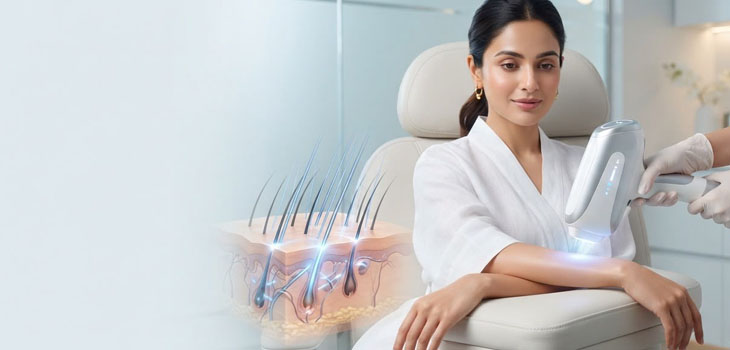
The hair grows in phases, i.e. growth, rest and shedding. The most effective time of laser treatment is the active growth stage that is why several sessions will be necessary. Generally, 6-8 sessions which are spaced a few weeks apart are suggested to bring about a noticeable amount of hair reduction.
Improved technological advancements in the sphere of lasers have made it possible to regulate the treatments according to the specifics of skin color and hair texture, and thus the process is safer and more accommodating than the previous systems.
Protective Wear and Personnel Safety
Laser hair removal is deemed to be a safe practice provided that it is done by trained individuals on approved machines. Cooling systems, adjustable wavelengths and pulse duration controls are some of the safety features that are implemented to safeguard the skin in the course of treatment.
The side effects that occur are mostly mild and short-term. These can be a light redness, warmth or even sensitivity just like a light sunburn that usually disappears in a few hours. Minor complications may occur in case of correct skin evaluation and guidelines.
There is the pre-treatment care that includes avoidance of sun exposure and secondary skin infection and is of great importance in mitigating risks. The treatment after care is aimed at calming the skin and shielding against UV rays.
What Results Can You Expect?
Laser hair removal causes permanent hair reduction as opposed to permanent removal. The majority of individuals observe the presence of lighter, finer hair after a number of sessions and major reduction in the cycles of the treatment.
Some of the factors that influence results are hair color, skin type, hormonal balance, and consistency of the sessions. Dark hair is more responsive because it has more pigments and the light or grey hair can respond minimally.
Maintenance sessions can be done once or twice a year to deal with new or dormant follicles that are activated with time.
Conclusion
The laser hair removal is a procedure that brings together the state of the art light technology and the cycle of hair growth in the body to eliminate unwanted hair in a safe and effective manner. Having the right knowledge, realistic expectations and professional care, it can be seen as a good substitute to the repetitive methods of hair removal.
Revyve Care is an evidence-based approach with skin safety and education being priority components when it comes to providing informed guidance to persons and caring about their skin.