


Psoriasis Skin Treatment: Triggers, Symptoms & Long-Term Management
Psoriasis is a chronic skin condition that can affect much more than appearance. It may cause red, raised, itchy or scaly patches that come and go over time. Understanding psoriasis triggers, recognising early symptoms and following a consistent treatment plan can help reduce flare-ups and protect skin health. Unlike a temporary rash, psoriasis often requires long-term management tailored to the individual. Treatment may include moisturisers, topical medicines, phototherapy or other prescribed therapies depending on the severity and location of symptoms. For people looking for psoriasis treatment in Faridabad, consulting a qualified dermatologist can help identify the condition accurately and create a practical care plan. Revyve Care focuses on personalised dermatological guidance to help patients manage psoriasis and maintain healthier skin over time.
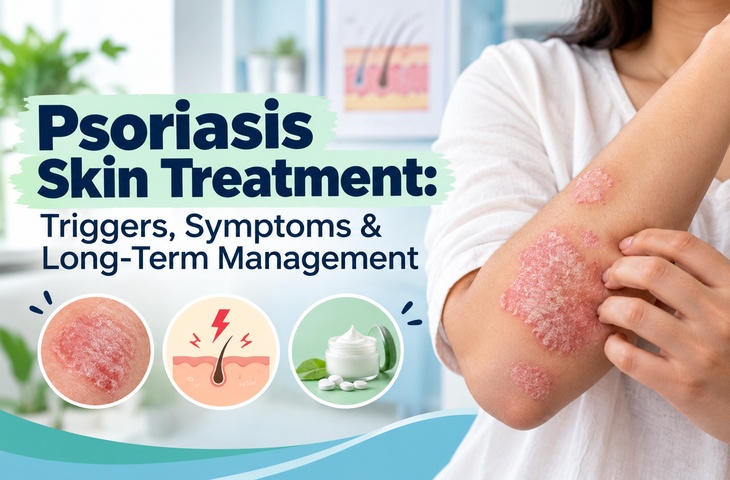
What Is Psoriasis?
Psoriasis is an inflammatory skin condition in which the immune system causes skin cells to develop and accumulate faster than usual. This can result in thickened, dry and scaly patches, commonly appearing on the elbows, knees, scalp and other areas.
The condition can vary considerably between individuals. Some people experience occasional mild patches, while others may have widespread or recurring symptoms.
Common Symptoms of Psoriasis
- • Typical signs may include:
- • Red or inflamed patches of skin
- • Silvery-white scales
- • Dryness and cracking
- • Itching, burning or soreness
- • Thickened or ridged nails
- • Scalp scaling
- • Symptoms that improve and later return
Early diagnosis can be useful because psoriasis can sometimes resemble eczema, fungal infections or other skin problems.
Understanding Psoriasis Triggers
Identifying personal psoriasis triggers is an important part of long-term management. Triggers differ from person to person, but several factors are commonly associated with flare-ups.
Common Factors That May Worsen Psoriasis
- • Stress: Emotional or physical stress may contribute to flare-ups.
- • Skin injuries: Cuts, scratches, sunburn and other skin trauma can sometimes cause new patches.
- • Infections: Certain infections may trigger or aggravate symptoms.
- • Weather changes: Cold, dry weather can make the skin drier and more uncomfortable.
- • Smoking and alcohol: These may worsen psoriasis in some individuals.
- • Certain medicines: Some medications can aggravate psoriasis, so patients should discuss their medicines with their doctor rather than stopping them independently.
- • Poor skin care: Excessive scratching or allowing the skin to become very dry may increase irritation.
Keeping a simple record of symptoms, lifestyle changes and flare-ups can help identify individual patterns.
Scalp Psoriasis vs Dandruff: What Is the Difference?
One common source of confusion is scalp psoriasis vs dandruff. Both conditions can cause flakes, but their appearance and underlying causes are different.
| Feature | Scalp Psoriasis | Dandruff |
|---|---|---|
| Appearance | Thicker, well-defined plaques with scaling | Fine, loose flakes |
| Skin | May appear red or inflamed | Usually mild irritation |
| Location | Can extend beyond the hairline | Generally remains on the scalp |
| Itching | Can be intense | Usually mild to moderate |
| Recurrence | Often chronic and recurring | Often improves with appropriate scalp care |
Because symptoms can overlap, persistent scalp scaling should be evaluated by a dermatologist instead of being treated only as dandruff.
Psoriasis Treatment Options
There is currently no universal treatment that permanently eliminates psoriasis, but appropriate treatment can control symptoms and reduce flare-ups.
Depending on the patient's condition, a dermatologist may recommend:
- Topical treatments: Creams, ointments or lotions may help reduce inflammation and scaling.
- Moisturisation: Regular moisturisers can reduce dryness, cracking and discomfort.
- Phototherapy: Controlled exposure to specific types of ultraviolet light may be recommended for certain patients.
- Systemic medicines: Moderate-to-severe psoriasis may require medicines that work throughout the body.
- Biologic therapies: Some patients with more extensive disease may be considered for targeted treatment.
The appropriate option depends on factors such as the severity, affected areas, previous treatment and overall health.
Long-Term Management of Psoriasis
Effective psoriasis care does not end when visible patches improve. Maintaining a consistent routine can help support long-term control.
Consider these practical measures:
- • Use gentle, fragrance-free skincare products when appropriate.
- • Moisturise regularly, particularly after bathing.
- • Avoid scratching or picking affected areas.
- • Identify and manage personal psoriasis triggers.
- • Follow prescribed treatment consistently.
- • Protect the skin from unnecessary injury and excessive sun exposure.
- • Attend follow-up appointments when recommended.
If symptoms are recurring or affecting daily life, professional evaluation can help determine whether the existing treatment needs adjustment.
When Should You See a Dermatologist?
Persistent scaling, unexplained red patches, severe itching or recurring skin lesions should not be ignored. Professional diagnosis is particularly important when symptoms spread, interfere with sleep or affect the scalp and nails.
If you are searching for the best doctor for psoriasis in Faridabad, choose a dermatologist who can assess your symptoms, distinguish psoriasis from similar skin conditions and explain suitable long-term treatment options.
Conclusion
Managing psoriasis requires more than treating an occasional flare-up. Recognising psoriasis triggers, understanding symptoms and following a personalised care routine can make long-term management more practical. Whether you are dealing with skin plaques, recurring scalp symptoms or uncertainty about scalp psoriasis vs dandruff, professional dermatological evaluation can provide clarity. For personalised psoriasis treatment in Faridabad, Revyve Care can help patients understand their condition and explore appropriate treatment and skincare strategies with professional guidance.
Frequently Asked Questions
1. What triggers commonly worsen psoriasis flare-ups?
Common psoriasis triggers may include stress, skin injuries, infections, cold or dry weather, smoking, alcohol and certain medicines. Triggers vary between individuals, so tracking flare-ups can help identify personal patterns.
2. How do you tell scalp psoriasis apart from dandruff?
Scalp psoriasis often produces thicker, clearly defined patches and scales that may extend beyond the hairline. Dandruff generally causes finer flakes and usually remains limited to the scalp.
3. How long does it take to see results from psoriasis treatment?
The timeline varies according to the treatment, severity and individual response. Some treatments may provide improvement within weeks, while others require longer-term use and regular dermatological monitoring.